# Desarrollado por Alberto Concejal / Geovisualization.net
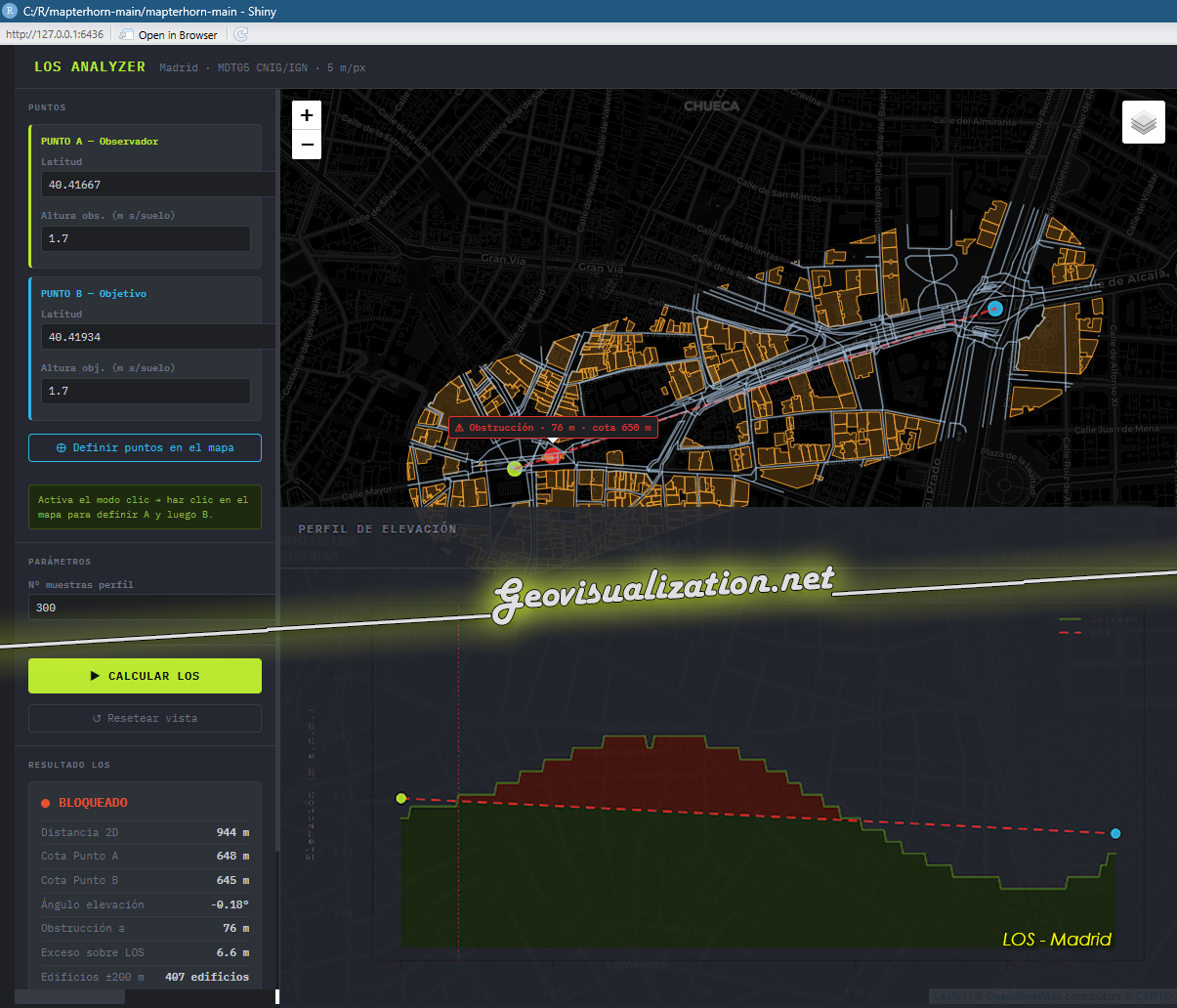
# LOS Analyzer — Madrid | MDT05 IGN/CNIG via WCS
# Dependencias: shiny, terra, leaflet, sf
# install.packages(c("shiny","terra","leaflet","sf"))
library(shiny)
library(terra)
library(leaflet)
library(sf)
library(jsonlite)
# ─────────────────────────────────────────────────────────────────────────────
# FUNCIONES AUXILIARES
# ─────────────────────────────────────────────────────────────────────────────
#' Descarga MDT05 del IGN via WCS 1.0.0 para un bounding box dado (EPSG:4326)
#' Devuelve un SpatRaster en EPSG:25830 (UTM30) — sin reproyectar para evitar
#' conflicto con proj.db de PostgreSQL/PostGIS
descargar_mdt05 <- function(lon_min, lat_min, lon_max, lat_max, buffer_deg = 0.005) {
# Buffer en grados
xmin <- lon_min - buffer_deg
ymin <- lat_min - buffer_deg
xmax <- lon_max + buffer_deg
ymax <- lat_max + buffer_deg
# Convertir bbox a UTM30 via sf (sf usa su propia PROJ, funciona bien)
bbox_geo <- st_bbox(c(xmin = xmin, ymin = ymin, xmax = xmax, ymax = ymax),
crs = 4326)
bbox_utm <- st_bbox(st_transform(st_as_sfc(bbox_geo), 25830))
# Resolución MDT05: 5 m/pixel — limitar a 800px máx
res_m <- 5
width_px <- min(ceiling((bbox_utm["xmax"] - bbox_utm["xmin"]) / res_m), 800)
height_px <- min(ceiling((bbox_utm["ymax"] - bbox_utm["ymin"]) / res_m), 800)
url <- paste0(
"https://servicios.idee.es/wcs-inspire/mdt",
"?SERVICE=WCS&VERSION=1.0.0&REQUEST=GetCoverage",
"&COVERAGE=Elevacion25830_5",
"&CRS=EPSG:25830",
"&BBOX=", bbox_utm["xmin"], ",", bbox_utm["ymin"], ",",
bbox_utm["xmax"], ",", bbox_utm["ymax"],
"&WIDTH=", width_px,
"&HEIGHT=", height_px,
"&FORMAT=GEOTIFFINT16"
)
tmp <- tempfile(fileext = ".tif")
tryCatch(
download.file(url, tmp, mode = "wb", quiet = TRUE),
error = function(e) stop("Error descargando MDT05: ", conditionMessage(e))
)
# Verificar que no es un XML de error
first_line <- readLines(tmp, n = 1, warn = FALSE)
if (grepl("xml|ServiceException", first_line, ignore.case = TRUE)) {
stop("El WCS devolvió un error: ", paste(readLines(tmp), collapse = " "))
}
r <- tryCatch(
rast(tmp),
error = function(e) stop("Error leyendo GeoTIFF del WCS: ", conditionMessage(e))
)
# Asignar extensión UTM30 manualmente (el WCS devuelve ENGCRS)
# No reproyectamos — trabajamos en UTM30 durante todo el análisis
ext(r) <- c(bbox_utm["xmin"], bbox_utm["xmax"],
bbox_utm["ymin"], bbox_utm["ymax"])
return(r) # SpatRaster en coordenadas UTM30 (metros)
}
#' Extrae perfil de elevación entre dos puntos WGS84
#' El DEM está en UTM30 — se convierten los puntos con sf, no el raster
#' Devuelve data.frame: distance, elevation, lon, lat
perfil_elevacion <- function(dem, lon_a, lat_a, lon_b, lat_b, n = 300) {
# Interpolar puntos en WGS84 y convertir a UTM30
lons <- seq(lon_a, lon_b, length.out = n)
lats <- seq(lat_a, lat_b, length.out = n)
pts_sf <- st_as_sf(data.frame(lon = lons, lat = lats),
coords = c("lon", "lat"), crs = 4326)
pts_utm <- st_transform(pts_sf, 25830)
coords <- st_coordinates(pts_utm)
# Extraer elevación del DEM en coordenadas UTM30
# extract devuelve 1 columna con nombre = nombre del archivo temporal
elev_raw <- terra::extract(dem, coords)
elev <- elev_raw[, ncol(elev_raw)]
# Distancia acumulada (m)
dx <- diff(coords[, 1])
dy <- diff(coords[, 2])
dist <- c(0, cumsum(sqrt(dx^2 + dy^2)))
data.frame(
idx = seq_len(n),
distance = dist,
elevation = elev,
lon = lons,
lat = lats
)
}
#' Calcula LOS entre A y B sobre un perfil dado
#' Devuelve lista con: visible, bloqueo_dist, bloqueo_elev, angle_deg
calcular_los <- function(perfil, h_a, h_b) {
n <- nrow(perfil)
elev <- perfil$elevation
dist <- perfil$distance
elev_a <- elev[1] + h_a
elev_b <- elev[n] + h_b
d_total <- dist[n]
# NA check
if (any(is.na(elev))) {
elev[is.na(elev)] <- min(elev, na.rm = TRUE)
}
# Pendiente de la línea de visión directa (en elevación/distancia)
slope <- (elev_b - elev_a) / d_total
# Elevación de la LOS en cada punto intermedio
elev_los <- elev_a + slope * dist
# Diferencia: terreno - LOS en puntos intermedios (excluir A y B)
diff_elev <- elev[2:(n-1)] - elev_los[2:(n-1)]
visible <- isTRUE(all(diff_elev <= 0))
bloqueo_idx <- if (!visible) which(diff_elev > 0)[1] + 1 else NA_integer_
bloqueo_dist <- if (!visible && !is.na(bloqueo_idx)) dist[bloqueo_idx] else NA_real_
bloqueo_elev <- if (!visible && !is.na(bloqueo_idx)) elev[bloqueo_idx] else NA_real_
exceso_max <- if (!visible) max(diff_elev, na.rm = TRUE) else 0
# Ángulo de elevación A→B (grados)
angle_deg <- atan2(elev_b - elev_a, d_total) * 180 / pi
list(
visible = visible,
bloqueo_dist = bloqueo_dist,
bloqueo_elev = bloqueo_elev,
exceso_max = exceso_max,
elev_a = elev[1],
elev_b = elev[n],
elev_los = elev_los,
angle_deg = angle_deg,
dist_total = d_total
)
}
#' Descarga edificios y vías OSM via Overpass en un buffer de la línea A-B
#' Devuelve lista: $edificios (sf polygons), $roads (sf lines)
descargar_osm <- function(lon_a, lat_a, lon_b, lat_b, buffer_m = 200) {
linea <- st_sfc(st_linestring(rbind(c(lon_a, lat_a), c(lon_b, lat_b))), crs = 4326)
buf_wgs <- st_transform(st_buffer(st_transform(linea, 25830), buffer_m), 4326)
bb <- st_bbox(buf_wgs)
resultado <- list(edificios = NULL, roads = NULL)
# Query 1: ways (buildings + highways)
q_ways <- paste0(
"[out:json][timeout:30];(",
"way[building](", bb["ymin"],",",bb["xmin"],",",bb["ymax"],",",bb["xmax"],");",
"way[highway](", bb["ymin"],",",bb["xmin"],",",bb["ymax"],",",bb["xmax"],");",
");out body;>;out skel qt;"
)
# Query 2: POI nodes
fetch_overpass <- function(query) {
tmp <- tempfile(fileext = ".json")
download.file(
paste0("https://overpass-api.de/api/interpreter?data=",
utils::URLencode(query, reserved = TRUE)),
tmp, mode = "wb", quiet = TRUE
)
jsonlite::fromJSON(readLines(tmp, warn = FALSE), simplifyVector = FALSE)$elements
}
tmp <- tempfile(fileext = ".json")
tryCatch({
elems_ways <- tryCatch(fetch_overpass(q_ways), error = function(e) list())
# Ways y nodes de geometría — solo de elems_ways
nodes_geom <- Filter(function(e) e$type == "node", elems_ways)
ways_all <- Filter(function(e) e$type == "way" && !is.null(e$nodes), elems_ways)
# Node lookup table para reconstruir geometrías de ways
node_df <- NULL
if (length(nodes_geom) > 0) {
m <- do.call(rbind, lapply(nodes_geom, function(n)
c(id = as.numeric(n$id), lon = as.numeric(n$lon), lat = as.numeric(n$lat))))
node_df <- as.data.frame(m)
}
# Helper: way nodes -> matrix of coords
way_coords <- function(w) {
if (is.null(node_df)) return(NULL)
ids <- as.numeric(unlist(w$nodes))
idx <- match(ids, node_df$id)
idx <- idx[!is.na(idx)]
if (length(idx) < 2) return(NULL)
cbind(node_df$lon[idx], node_df$lat[idx])
}
# ── Edificios ──
ways_bld <- Filter(function(w) !is.null(w$tags$building), ways_all)
if (length(ways_bld) > 0) {
polys <- lapply(ways_bld, function(w) {
co <- way_coords(w)
if (is.null(co) || !is.matrix(co) || nrow(co) < 4) return(NULL)
tryCatch(st_polygon(list(co)), error = function(e) NULL)
})
polys <- Filter(Negate(is.null), polys)
if (length(polys) > 0) {
sf_bld <- st_sf(
osm_id = sapply(ways_bld[seq_along(polys)], function(w) w$id),
name = sapply(ways_bld[seq_along(polys)], function(w)
if (isTRUE(length(w$tags$name) > 0)) as.character(w$tags$name)[1] else ""),
geometry = st_sfc(polys, crs = 4326)
)
resultado$edificios <- tryCatch(st_intersection(sf_bld, buf_wgs),
error = function(e) sf_bld)
}
}
# ── Vías ──
ways_hwy <- Filter(function(w) !is.null(w$tags$highway), ways_all)
if (length(ways_hwy) > 0) {
lns <- lapply(ways_hwy, function(w) {
co <- way_coords(w)
if (is.null(co)) return(NULL)
tryCatch(st_linestring(co), error = function(e) NULL)
})
lns <- Filter(Negate(is.null), lns)
if (length(lns) > 0) {
sf_hwy <- st_sf(
osm_id = sapply(ways_hwy[seq_along(lns)], function(w) w$id),
name = sapply(ways_hwy[seq_along(lns)], function(w)
if (isTRUE(length(w$tags$name) > 0)) as.character(w$tags$name)[1] else ""),
highway = sapply(ways_hwy[seq_along(lns)], function(w) as.character(w$tags$highway)[1]),
geometry = st_sfc(lns, crs = 4326)
)
resultado$roads <- tryCatch(st_intersection(sf_hwy, buf_wgs),
error = function(e) sf_hwy)
}
}
}, error = function(e) message("Overpass error: ", conditionMessage(e)))
return(resultado)
}
# ─────────────────────────────────────────────────────────────────────────────
# UI
# ─────────────────────────────────────────────────────────────────────────────
ui <- fluidPage(
tags$head(
tags$style(HTML("
@import url('https://fonts.googleapis.com/css2?family=IBM+Plex+Mono:wght@400;600&family=IBM+Plex+Sans:wght@400;500&display=swap');
/* ── Paleta coherente: gris medio uniforme ── */
:root {
--bg: #1e2023;
--bg2: #252830;
--bg3: #2d3138;
--border: #363b44;
--txt: #c8cdd6;
--txt-dim: #6b7280;
--accent-a: #b8e830;
--accent-b: #30b8e8;
--danger: #e85030;
}
* { box-sizing: border-box; margin: 0; padding: 0; }
body { font-family: 'IBM Plex Sans', sans-serif; background: var(--bg); color: var(--txt); }
.app-header {
background: var(--bg2); border-bottom: 1px solid var(--border);
padding: 12px 20px; display: flex; align-items: baseline; gap: 14px;
}
.app-title {
font-family: 'IBM Plex Mono', monospace; font-size: 14px;
font-weight: 600; color: var(--accent-a); letter-spacing: .08em;
}
.app-sub { font-family: 'IBM Plex Mono', monospace; font-size: 11px; color: var(--txt-dim); }
.main-wrap { display: flex; height: calc(100vh - 49px); overflow: hidden; }
/* ── Paneles laterales ── */
.lpanel {
width: 272px; min-width: 272px; background: var(--bg2);
border-right: 1px solid var(--border); overflow-y: auto;
display: flex; flex-direction: column; position: relative;
}
.rpanel {
width: 320px; min-width: 220px; background: var(--bg2);
border-left: 1px solid var(--border); overflow-y: auto;
display: flex; flex-direction: column; position: relative;
}
.sec { padding: 13px 14px; border-bottom: 1px solid var(--border); }
.sec-lbl {
font-family: 'IBM Plex Mono', monospace; font-size: 9px; font-weight: 600;
color: var(--txt-dim); letter-spacing: .12em; text-transform: uppercase; margin-bottom: 10px;
}
/* Bloques A / B */
.pt-block {
background: var(--bg3); border: 1px solid var(--border); border-radius: 5px;
padding: 10px; margin-bottom: 8px;
}
.pt-block.pta { border-left: 3px solid var(--accent-a); }
.pt-block.ptb { border-left: 3px solid var(--accent-b); }
.pt-lbl { font-family: 'IBM Plex Mono', monospace; font-size: 10px;
font-weight: 600; margin-bottom: 7px; }
.pta .pt-lbl { color: var(--accent-a); }
.ptb .pt-lbl { color: var(--accent-b); }
/* inputs */
.form-group { margin-bottom: 6px; }
label { font-size: 10px; color: var(--txt-dim); font-family: 'IBM Plex Mono', monospace;
margin-bottom: 2px; display: block; }
.form-control {
background: var(--bg) !important; border: 1px solid var(--border) !important;
color: var(--txt) !important; font-family: 'IBM Plex Mono', monospace !important;
font-size: 11px !important; border-radius: 3px !important;
padding: 4px 7px !important; height: 27px !important; width: 100% !important;
}
.form-control:focus { border-color: var(--accent-a) !important; box-shadow: none !important; }
select.form-control { height: 27px !important; }
.row-2 { display: flex; gap: 6px; }
.row-2 .form-group { flex: 1; }
/* botones */
.btn-go {
width: 100%; background: var(--accent-a); color: #0e0e0e; border: none;
border-radius: 4px; font-family: 'IBM Plex Mono', monospace;
font-size: 12px; font-weight: 600; padding: 9px; cursor: pointer;
letter-spacing: .05em; transition: background .12s;
}
.btn-go:hover:not(:disabled) { background: #caf050; }
.btn-go:disabled { background: var(--border); color: var(--txt-dim); cursor: not-allowed; }
.btn-sec {
width: 100%; background: transparent; color: var(--accent-b);
border: 1px solid var(--accent-b); border-radius: 4px;
font-family: 'IBM Plex Mono', monospace; font-size: 11px;
padding: 6px; cursor: pointer; margin-top: 5px; transition: background .12s;
}
.btn-sec:hover { background: rgba(48,184,232,.08); }
/* resultado */
.res-block { background: var(--bg3); border: 1px solid var(--border); border-radius: 5px; padding: 12px; }
.res-status { display: flex; align-items: center; gap: 9px; margin-bottom: 8px; }
.dot { width: 9px; height: 9px; border-radius: 50%; flex-shrink: 0; }
.dot.ok { background: var(--accent-a); }
.dot.ko { background: var(--danger); }
.dot.na { background: var(--border); }
.res-txt { font-family: 'IBM Plex Mono', monospace; font-size: 13px; font-weight: 600; }
.res-txt.ok { color: var(--accent-a); }
.res-txt.ko { color: var(--danger); }
.res-txt.na { color: var(--txt-dim); }
.kv { display: flex; justify-content: space-between; padding: 4px 0;
border-top: 1px solid var(--border); font-size: 11px; }
.k { color: var(--txt-dim); font-family: 'IBM Plex Mono', monospace; }
.v { color: var(--txt); font-family: 'IBM Plex Mono', monospace; font-weight: 600; }
/* hint */
.hint {
background: #1e2a10; border: 1px solid #3a5018; border-radius: 4px;
padding: 7px 9px; font-family: 'IBM Plex Mono', monospace;
font-size: 10px; color: #8ab040; margin-top: 7px; line-height: 1.5;
}
#click_st {
font-family: 'IBM Plex Mono', monospace; font-size: 10px; color: var(--accent-a);
padding: 3px 0; min-height: 16px; display: block;
}
/* mapa */
.map-wrap { flex: 1; position: relative; }
#mapa { width: 100%; height: 100%; }
.profile-wrap { padding: 14px; overflow-y: auto; }
/* handles redimensionar */
.resize-handle-r {
position: absolute; top: 0; right: -4px; width: 8px; height: 100%;
cursor: ew-resize; z-index: 100; background: transparent;
}
.resize-handle-l {
position: absolute; top: 0; left: -4px; width: 8px; height: 100%;
cursor: ew-resize; z-index: 100; background: transparent;
}
.resize-handle-r:hover, .resize-handle-r.dragging,
.resize-handle-l:hover, .resize-handle-l.dragging {
background: rgba(184,232,48,0.2);
}
/* scrollbar */
::-webkit-scrollbar { width: 4px; }
::-webkit-scrollbar-track { background: var(--bg); }
::-webkit-scrollbar-thumb { background: var(--border); border-radius: 2px; }
.shiny-output-error { color: var(--danger); font-size: 11px; font-family: monospace; padding: 8px; }
.shiny-output-error:before { content: '✕ '; }
.footer { padding: 12px 14px; margin-top: auto; border-top: 1px solid var(--border); }
.footer p { font-family: 'IBM Plex Mono', monospace; font-size: 10px; margin-bottom: 2px; }
.btn-export { width: 100%; }
"))
),
# Header
div(class = "app-header",
tags$span(class = "app-title", "LOS ANALYZER"),
tags$span(class = "app-sub", "Madrid · MDT05 CNIG/IGN · 5 m/px")
),
div(class = "main-wrap",
# ── Panel izquierdo ──────────────────────────────────────────────────────
div(class = "lpanel", id = "lpanel",
tags$div(class = "resize-handle", id = "resize-handle"),
# Puntos
div(class = "sec",
tags$p(class = "sec-lbl", "Puntos"),
div(class = "pt-block pta",
tags$p(class = "pt-lbl", "PUNTO A — Observador"),
div(class = "row-2",
div(class = "form-group",
tags$label("Latitud"),
numericInput("lat_a", NULL, 40.4168, step = 0.00001)
),
div(class = "form-group",
tags$label("Longitud"),
numericInput("lon_a", NULL, -3.7038, step = 0.00001)
)
),
div(class = "form-group",
tags$label("Altura obs. (m s/suelo)"),
numericInput("h_a", NULL, 1.7, min = 0, max = 300, step = 0.1)
)
),
div(class = "pt-block ptb",
tags$p(class = "pt-lbl", "PUNTO B — Objetivo"),
div(class = "row-2",
div(class = "form-group",
tags$label("Latitud"),
numericInput("lat_b", NULL, 40.4200, step = 0.00001)
),
div(class = "form-group",
tags$label("Longitud"),
numericInput("lon_b", NULL, -3.6900, step = 0.00001)
)
),
div(class = "form-group",
tags$label("Altura obj. (m s/suelo)"),
numericInput("h_b", NULL, 1.7, min = 0, max = 300, step = 0.1)
)
),
actionButton("toggle_clic", "⊕ Definir puntos en el mapa", class = "btn-sec"),
tags$span(id = "click_st", textOutput("click_estado", inline = TRUE)),
div(class = "hint",
"Activa el modo clic → haz clic en el mapa para definir A y luego B."
)
),
# Parámetros
div(class = "sec",
tags$p(class = "sec-lbl", "Parámetros"),
div(class = "row-2",
div(class = "form-group",
tags$label("Nº muestras perfil"),
numericInput("n_pts", NULL, 300, min = 100, max = 1000, step = 50)
),
div(class = "form-group",
tags$label("Buffer descarga (°)"),
numericInput("buf", NULL, 0.005, min = 0.002, max = 0.02, step = 0.001)
)
)
),
# Calcular + Reset
div(class = "sec",
actionButton("calcular", "▶ CALCULAR LOS", class = "btn-go"),
tags$div(style = "margin-top: 6px;",
actionButton("resetear", "↺ Resetear vista", class = "btn-sec",
style = "color: var(--txt-dim); border-color: var(--border);")
)
),
# Resultado
div(class = "sec",
tags$p(class = "sec-lbl", "Resultado LOS"),
div(class = "res-block",
uiOutput("resultado_ui")
)
),
# Exportar
div(class = "sec",
tags$p(class = "sec-lbl", "Exportar"),
downloadButton("exportar_gpkg", "⬇ Exportar GPKG",
style = "width:100%; background: var(--bg3); color: var(--txt);
border: 1px solid var(--border); border-radius: 4px;
font-family: IBM Plex Mono, monospace; font-size: 11px;
padding: 7px; cursor: pointer; text-align: center;")
),
div(class = "footer",
tags$p(style = "color: var(--accent-a); margin-bottom: 3px;",
"Developed by Alberto Concejal"),
tags$p(style = "color: var(--txt-dim);",
"Geovisualization.net")
)
),
# ── Mapa ─────────────────────────────────────────────────────────────────
div(class = "map-wrap",
leafletOutput("mapa", width = "100%", height = "100%")
),
# ── Panel perfil ─────────────────────────────────────────────────────────
div(class = "rpanel", id = "rpanel",
tags$div(class = "resize-handle-l", id = "resize-handle-r"),
div(class = "sec",
tags$p(class = "sec-lbl", "Perfil de elevación")
),
div(class = "profile-wrap",
plotOutput("perfil_plot", height = "340px", width = "100%"),
uiOutput("perfil_stats_ui")
)
)
),
tags$script(HTML("
(function() {
var activeHandle = null, activePanel = null, dragging = false;
var startX, startW, direction;
function initResize(handleId, panelId, dir) {
var h = document.getElementById(handleId);
var p = document.getElementById(panelId);
if (!h || !p) return;
h.addEventListener('mousedown', function(e) {
dragging = true;
activeHandle = h;
activePanel = p;
direction = dir;
startX = e.clientX;
startW = p.getBoundingClientRect().width;
h.classList.add('dragging');
e.preventDefault();
});
}
document.addEventListener('DOMContentLoaded', function() {
initResize('resize-handle', 'lpanel', 1);
initResize('resize-handle-r', 'rpanel', -1);
});
document.addEventListener('mousemove', function(e) {
if (!dragging || !activePanel) return;
var delta = (e.clientX - startX) * direction;
var newW = Math.min(Math.max(startW + delta, 180), 700);
activePanel.style.width = newW + 'px';
activePanel.style.minWidth = newW + 'px';
});
document.addEventListener('mouseup', function() {
dragging = false;
if (activeHandle) activeHandle.classList.remove('dragging');
activeHandle = null;
activePanel = null;
});
})();
Shiny.addCustomMessageHandler('leaflet_resize', function(msg) {
setTimeout(function() {
var map = HTMLWidgets.find('#' + msg.id);
if (map) map.getMap().invalidateSize();
}, 100);
});
"))
)
# ─────────────────────────────────────────────────────────────────────────────
# SERVER
# ─────────────────────────────────────────────────────────────────────────────
server <- function(input, output, session) {
rv <- reactiveValues(
dem = NULL,
perfil = NULL,
los = NULL,
click_modo = FALSE,
next_pt = "A",
dist_m = NA,
edificios = NULL,
roads = NULL,
lon_a_calc = NULL,
lat_a_calc = NULL,
lon_b_calc = NULL,
lat_b_calc = NULL
)
# ── Mapa base ──────────────────────────────────────────────────────────────
output$mapa <- renderLeaflet({
leaflet() %>%
addProviderTiles("Esri.WorldGrayCanvas", group = "Gris") %>%
addProviderTiles("CartoDB.DarkMatter", group = "Oscuro") %>%
addProviderTiles("Esri.WorldImagery", group = "Satélite") %>%
addProviderTiles("CartoDB.Positron", group = "Claro") %>%
addProviderTiles("OpenStreetMap.Mapnik", group = "OSM") %>%
addLayersControl(
baseGroups = c("Gris", "Oscuro", "Satélite", "Claro", "OSM"),
overlayGroups = c("Edificios OSM", "Vías OSM"),
options = layersControlOptions(collapsed = TRUE)
) %>%
setView(lng = -3.703, lat = 40.418, zoom = 13)
})
# ── Observe: dibujar mapa + OSM cuando rv$los cambia ─────────────────────
observeEvent(rv$los, {
req(rv$los, rv$lon_a_calc, rv$lat_a_calc, rv$lon_b_calc, rv$lat_b_calc)
los <- rv$los
lon_a <- rv$lon_a_calc
lat_a <- rv$lat_a_calc
lon_b <- rv$lon_b_calc
lat_b <- rv$lat_b_calc
col_linea <- if (isTRUE(los$visible)) "#b8e830" else "#e83030"
# ── Línea LOS
p <- leafletProxy("mapa") %>%
clearGroup("LOS") %>%
clearGroup("Obstruccion") %>%
clearGroup("Edificios OSM") %>%
clearGroup("Vías OSM") %>%
addPolylines(
lng = c(lon_a, lon_b), lat = c(lat_a, lat_b),
group = "LOS", color = col_linea, weight = 2.5, opacity = .85,
dashArray = if (isTRUE(los$visible)) NULL else "7,5"
)
# ── Marcador obstrucción
if (!isTRUE(los$visible) && !is.na(los$bloqueo_dist)) {
frac <- los$bloqueo_dist / los$dist_total
lon_blq <- lon_a + frac * (lon_b - lon_a)
lat_blq <- lat_a + frac * (lat_b - lat_a)
p <- p %>% addCircleMarkers(
lng = lon_blq, lat = lat_blq, group = "Obstruccion",
radius = 8, color = "#e83030", fillColor = "#e83030",
fillOpacity = 0.9, weight = 2, opacity = 1,
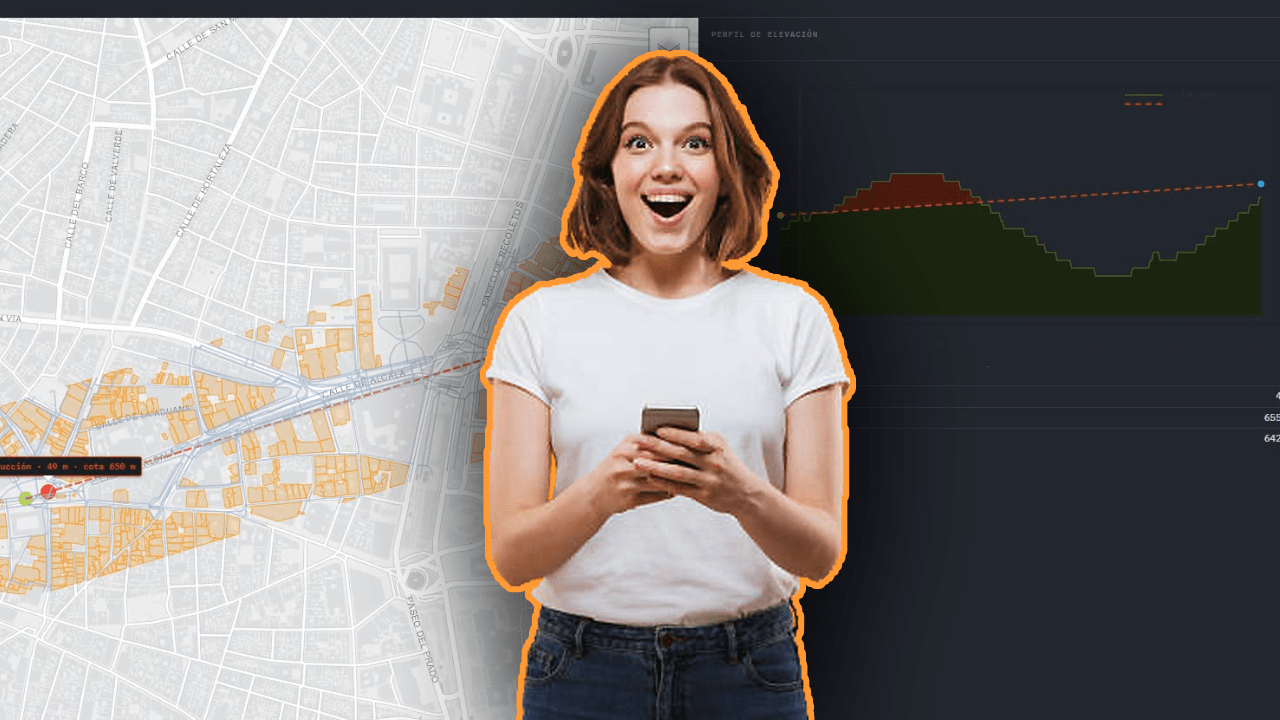
label = paste0("⚠ Obstrucción · ", round(los$bloqueo_dist, 0),
" m · cota ", round(los$bloqueo_elev, 0), " m"),
labelOptions = labelOptions(
permanent = TRUE, direction = "top", offset = c(0, -12),
style = list(
"background-color" = "#1e2023", "color" = "#e83030",
"font-family" = "IBM Plex Mono, monospace", "font-size" = "10px",
"border-color" = "#e83030", "font-weight" = "600", "padding" = "3px 6px"
)
)
)
}
# ── Zoom
pad <- 0.004
p %>% fitBounds(
lng1 = min(lon_a, lon_b) - pad, lat1 = min(lat_a, lat_b) - pad,
lng2 = max(lon_a, lon_b) + pad, lat2 = max(lat_a, lat_b) + pad
)
# ── Descargar OSM y dibujar en observe separado via rv
osm <- tryCatch(
descargar_osm(lon_a, lat_a, lon_b, lat_b, buffer_m = 200),
error = function(e) list(edificios = NULL, roads = NULL)
)
rv$edificios <- osm$edificios
rv$roads <- osm$roads
})
# ── Observe: dibujar capas OSM cuando rv$edificios cambia ─────────────────
observeEvent(rv$edificios, {
req(rv$lon_a_calc)
p <- leafletProxy("mapa") %>%
clearGroup("Edificios OSM") %>%
clearGroup("Vías OSM")
if (!is.null(rv$edificios) && nrow(rv$edificios) > 0) {
p <- p %>% addPolygons(
data = rv$edificios, group = "Edificios OSM",
color = "#f0a030", weight = 1, opacity = .9,
fillColor = "#f0a030", fillOpacity = .25,
label = ~paste0("id: ", osm_id),
labelOptions = labelOptions(style = list(
"background-color" = "#1e2023", "color" = "#f0a030",
"font-family" = "IBM Plex Mono", "font-size" = "10px"
))
)
}
if (!is.null(rv$roads) && nrow(rv$roads) > 0) {
p <- p %>% addPolylines(
data = rv$roads, group = "Vías OSM",
color = "#a0b8d0", weight = 1.5, opacity = .7,
label = ~name
)
}
})
# ── Toggle modo clic ───────────────────────────────────────────────────────
observeEvent(input$toggle_clic, {
rv$click_modo <- !rv$click_modo
rv$next_pt <- "A"
})
output$click_estado <- renderText({
if (rv$click_modo)
paste0("Clic activo — define Punto ", rv$next_pt, " en el mapa")
else ""
})
# ── Capturar clic en mapa ──────────────────────────────────────────────────
observeEvent(input$mapa_click, {
if (!rv$click_modo) return()
cl <- input$mapa_click
if (rv$next_pt == "A") {
updateNumericInput(session, "lat_a", value = round(cl$lat, 5))
updateNumericInput(session, "lon_a", value = round(cl$lng, 5))
rv$next_pt <- "B"
} else {
updateNumericInput(session, "lat_b", value = round(cl$lat, 5))
updateNumericInput(session, "lon_b", value = round(cl$lng, 5))
rv$click_modo <- FALSE
rv$next_pt <- "A"
}
})
# ── Actualizar marcadores reactivamente ───────────────────────────────────
observe({
req(input$lat_a, input$lon_a, input$lat_b, input$lon_b)
leafletProxy("mapa") %>%
clearGroup("Puntos") %>%
addCircleMarkers(
lng = input$lon_a, lat = input$lat_a, group = "Puntos",
radius = 7, color = "#b8e830", fillColor = "#b8e830", fillOpacity = .9,
weight = 2, opacity = 1, label = "A — Observador"
) %>%
addCircleMarkers(
lng = input$lon_b, lat = input$lat_b, group = "Puntos",
radius = 7, color = "#30b8e8", fillColor = "#30b8e8", fillOpacity = .9,
weight = 2, opacity = 1, label = "B — Objetivo"
)
})
# ── Calcular LOS ───────────────────────────────────────────────────────────
observeEvent(input$calcular, {
req(input$lat_a, input$lon_a, input$lat_b, input$lon_b)
# Reset
rv$dem <- NULL
rv$perfil <- NULL
rv$los <- NULL
withProgress(message = "Descargando MDT05 del IGN…", value = .1, {
tryCatch({
lon_min <- min(input$lon_a, input$lon_b)
lon_max <- max(input$lon_a, input$lon_b)
lat_min <- min(input$lat_a, input$lat_b)
lat_max <- max(input$lat_a, input$lat_b)
dem <- descargar_mdt05(lon_min, lat_min, lon_max, lat_max,
buffer_deg = input$buf)
rv$dem <- dem
incProgress(.4, message = "Extrayendo perfil de elevación…")
perfil <- perfil_elevacion(dem,
input$lon_a, input$lat_a,
input$lon_b, input$lat_b,
n = as.integer(input$n_pts))
rv$perfil <- perfil
rv$dist_m <- perfil$distance[nrow(perfil)]
incProgress(.3, message = "Calculando LOS…")
los <- calcular_los(perfil, input$h_a, input$h_b)
rv$los <- los
incProgress(.05, message = "Listo.")
# Guardar coords para el observe de mapa
rv$lon_a_calc <- input$lon_a
rv$lat_a_calc <- input$lat_a
rv$lon_b_calc <- input$lon_b
rv$lat_b_calc <- input$lat_b
}, error = function(e) {
showNotification(paste("Error:", conditionMessage(e)),
type = "error", duration = 10)
})
})
})
# ── Reset ─────────────────────────────────────────────────────────────────
observeEvent(input$resetear, {
rv$dem <- NULL
rv$perfil <- NULL
rv$los <- NULL
rv$edificios <- NULL
rv$dist_m <- NA
leafletProxy("mapa") %>%
clearShapes() %>%
clearMarkers() %>%
clearGroup("Edificios OSM") %>%
clearGroup("Vías OSM") %>%
setView(lng = -3.703, lat = 40.418, zoom = 13)
})
# ── Exportar GPKG ────────────────────────────────────────────────────────
output$exportar_gpkg <- downloadHandler(
filename = function() {
paste0("LOS_Madrid_", format(Sys.time(), "%Y%m%d_%H%M%S"), ".gpkg")
},
content = function(file) {
req(rv$perfil, rv$los)
# ── Punto A
pt_a <- st_sf(
id = "A",
tipo = "Observador",
cota = rv$los$elev_a,
geometry = st_sfc(st_point(c(isolate(input$lon_a), isolate(input$lat_a))), crs = 4326)
)
# ── Punto B
pt_b <- st_sf(
id = "B",
tipo = "Objetivo",
cota = rv$los$elev_b,
geometry = st_sfc(st_point(c(isolate(input$lon_b), isolate(input$lat_b))), crs = 4326)
)
# ── Línea LOS
linea_los <- st_sf(
visible = rv$los$visible,
dist_m = round(rv$dist_m, 1),
angulo_deg = round(rv$los$angle_deg, 3),
exceso_m = round(rv$los$exceso_max, 2),
bloqueo_dist = ifelse(is.na(rv$los$bloqueo_dist), NA_real_,
round(rv$los$bloqueo_dist, 1)),
geometry = st_sfc(
st_linestring(rbind(
c(isolate(input$lon_a), isolate(input$lat_a)),
c(isolate(input$lon_b), isolate(input$lat_b))
)),
crs = 4326
)
)
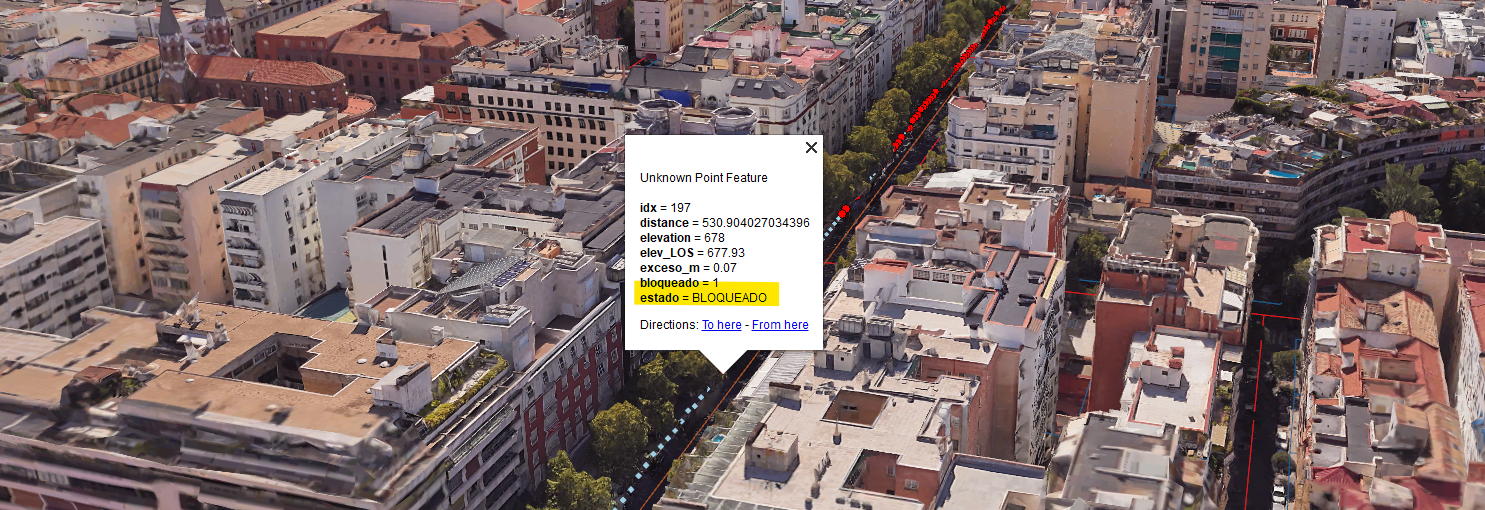
# ── Perfil de elevación como puntos con estado LOS por punto
perfil_df <- rv$perfil[, c("idx","distance","elevation","lon","lat")]
# Calcular elevación de la LOS en cada punto del perfil
elev_a_obs <- rv$los$elev_a + isolate(input$h_a)
elev_b_obs <- rv$los$elev_b + isolate(input$h_b)
slope_los <- (elev_b_obs - elev_a_obs) / rv$los$dist_total
elev_los_pts <- elev_a_obs + slope_los * perfil_df$distance
# Punto bloqueado = terreno supera la LOS
perfil_df$elev_LOS <- round(elev_los_pts, 2)
perfil_df$exceso_m <- round(perfil_df$elevation - elev_los_pts, 2)
perfil_df$bloqueado <- perfil_df$elevation > elev_los_pts
perfil_df$estado <- ifelse(perfil_df$bloqueado, "BLOQUEADO", "VISIBLE")
perfil_sf <- st_as_sf(perfil_df, coords = c("lon","lat"), crs = 4326)
# ── Escribir GPKG — capas vectoriales
st_write(pt_a, file, layer = "punto_A", driver = "GPKG", quiet = TRUE)
st_write(pt_b, file, layer = "punto_B", driver = "GPKG", append = TRUE, quiet = TRUE)
st_write(linea_los, file, layer = "linea_LOS", driver = "GPKG", append = TRUE, quiet = TRUE)
st_write(perfil_sf, file, layer = "perfil_elevacion", driver = "GPKG", append = TRUE, quiet = TRUE)
# ── Edificios OSM
if (!is.null(rv$edificios) && nrow(rv$edificios) > 0) {
# Quedarse solo con columnas simples (sin geometrías anidadas de st_intersection)
edif_export <- tryCatch({
edif <- rv$edificios
edif <- edif[, c("osm_id", "name", "geometry")]
edif$osm_id <- as.character(edif$osm_id)
# Forzar solo polígonos/multipolígonos
edif <- edif[st_geometry_type(edif) %in% c("POLYGON","MULTIPOLYGON"), ]
if (nrow(edif) > 0) edif else NULL
}, error = function(e) NULL)
if (!is.null(edif_export) && nrow(edif_export) > 0) {
st_write(edif_export, file, layer = "edificios_OSM",
driver = "GPKG", append = TRUE, quiet = TRUE)
}
}
# ── Vías OSM
if (!is.null(rv$edificios)) {
# roads están en rv implícitamente — los regeneramos del osm guardado
# Para no re-descargar, guardamos roads en rv también
if (!is.null(rv$roads) && nrow(rv$roads) > 0) {
roads_export <- tryCatch({
r <- rv$roads[, c("osm_id","name","highway","geometry")]
r$osm_id <- as.character(r$osm_id)
r[st_geometry_type(r) %in% c("LINESTRING","MULTILINESTRING"), ]
}, error = function(e) NULL)
if (!is.null(roads_export) && nrow(roads_export) > 0) {
st_write(roads_export, file, layer = "vias_OSM",
driver = "GPKG", append = TRUE, quiet = TRUE)
}
}
}
# ── Punto de obstrucción (si existe)
if (!isTRUE(rv$los$visible) && !is.na(rv$los$bloqueo_dist)) {
frac <- rv$los$bloqueo_dist / rv$los$dist_total
lon_blq <- isolate(input$lon_a) + frac * (isolate(input$lon_b) - isolate(input$lon_a))
lat_blq <- isolate(input$lat_a) + frac * (isolate(input$lat_b) - isolate(input$lat_a))
pt_blq <- st_sf(
tipo = "Obstrucción",
dist_desde_A = round(rv$los$bloqueo_dist, 1),
cota = round(rv$los$bloqueo_elev, 1),
exceso_m = round(rv$los$exceso_max, 2),
geometry = st_sfc(st_point(c(lon_blq, lat_blq)), crs = 4326)
)
st_write(pt_blq, file, layer = "obstruccion",
driver = "GPKG", append = TRUE, quiet = TRUE)
}
}
)
# ── UI Resultado ──────────────────────────────────────────────────────────
output$resultado_ui <- renderUI({
if (is.null(rv$los)) {
return(tagList(
div(class = "res-status",
div(class = "dot na"),
span(class = "res-txt na", "Sin calcular")
)
))
}
los <- rv$los
visible <- isTRUE(los$visible)
cls <- if (isTRUE(visible)) "ok" else "ko"
lbl <- if (isTRUE(visible)) "VISIBLE" else "BLOQUEADO"
tagList(
div(class = "res-status",
div(class = paste("dot", cls)),
span(class = paste("res-txt", cls), lbl)
),
div(class = "kv",
span(class = "k", "Distancia 2D"),
span(class = "v", paste0(round(rv$dist_m, 0), " m"))
),
div(class = "kv",
span(class = "k", "Cota Punto A"),
span(class = "v", paste0(round(los$elev_a, 1), " m"))
),
div(class = "kv",
span(class = "k", "Cota Punto B"),
span(class = "v", paste0(round(los$elev_b, 1), " m"))
),
div(class = "kv",
span(class = "k", "Ángulo elevación"),
span(class = "v", paste0(round(los$angle_deg, 2), "°"))
),
if (!isTRUE(visible)) div(class = "kv",
span(class = "k", "Obstrucción a"),
span(class = "v", paste0(round(los$bloqueo_dist, 0), " m"))
),
if (!isTRUE(visible)) div(class = "kv",
span(class = "k", "Exceso sobre LOS"),
span(class = "v", paste0(round(los$exceso_max, 1), " m"))
),
div(class = "kv",
span(class = "k", "Edificios ±200 m"),
span(class = "v",
if (is.null(rv$edificios)) "—"
else paste0(nrow(rv$edificios), " edificios")
)
)
)
})
# ── Plot perfil ───────────────────────────────────────────────────────────
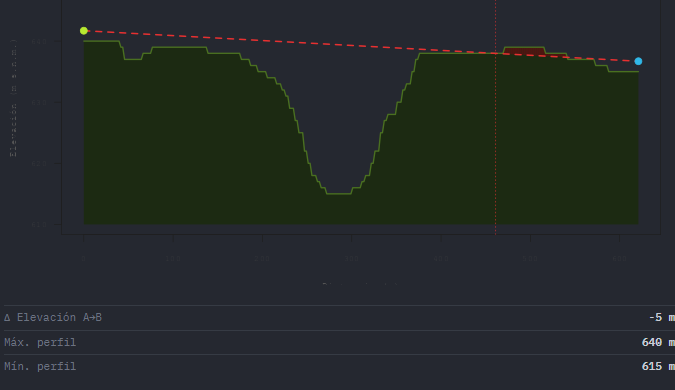
output$perfil_plot <- renderPlot({
req(rv$perfil, rv$los)
df <- rv$perfil
los <- rv$los
n <- nrow(df)
col_los <- if (isTRUE(los$visible)) "#b8e830" else "#e83030"
par(
bg = "#252830", col.axis = "#444", col.lab = "#555",
fg = "#1e1e1e", mar = c(3.5, 4, 1, 1), family = "mono"
)
y_min <- min(df$elevation, na.rm = TRUE) - 5
y_max <- max(max(df$elevation, na.rm = TRUE),
max(los$elev_los, na.rm = TRUE)) + 10
plot(df$distance, df$elevation,
type = "n", ylim = c(y_min, y_max),
xlab = "Distancia (m)", ylab = "Elevación (m s.n.m.)",
las = 1, cex.axis = .72, cex.lab = .8,
col.lab = "#555", col.axis = "#444")
# 1. Relleno terreno (base)
polygon(c(df$distance, rev(df$distance)),
c(df$elevation, rep(y_min, n)),
col = "#1c2a12", border = NA)
# 2. Zona bloqueada: solo donde terreno > LOS, encima del terreno
if (!isTRUE(los$visible)) {
elev_clipped <- pmin(df$elevation, los$elev_los)
# Polígono entre LOS y terreno donde terreno > LOS
over <- df$elevation > los$elev_los
if (any(over, na.rm = TRUE)) {
for (i in seq_len(n - 1)) {
if (isTRUE(over[i]) || isTRUE(over[i+1])) {
xs <- c(df$distance[i], df$distance[i+1],
df$distance[i+1], df$distance[i])
ys <- c(los$elev_los[i], los$elev_los[i+1],
df$elevation[i+1], df$elevation[i])
polygon(xs, ys, col = "#5a1010cc", border = NA)
}
}
}
# Línea vertical en punto de primer bloqueo
if (!is.na(los$bloqueo_dist)) {
abline(v = los$bloqueo_dist, col = "#e83030aa", lty = 3, lwd = 1.2)
}
}
# 3. Línea terreno (encima del relleno)
lines(df$distance, df$elevation, col = "#4a7020", lwd = 1.8)
# 4. Línea de visión directa
lines(df$distance, los$elev_los,
col = col_los, lwd = 2,
lty = if (isTRUE(los$visible)) 1 else 2)
# Puntos A y B
points(c(0, df$distance[n]),
c(df$elevation[1] + input$h_a, df$elevation[n] + input$h_b),
col = c("#b8e830", "#30b8e8"), pch = 19, cex = 1.3)
legend("topright",
legend = c("Terreno", "LOS"),
col = c("#4a7020", col_los),
lwd = c(1.8, 2),
lty = c(1, if (isTRUE(los$visible)) 1 else 2),
bty = "n", text.col = "#555", cex = .73)
}, bg = "#252830")
# ── Stats perfil ──────────────────────────────────────────────────────────
output$perfil_stats_ui <- renderUI({
req(rv$perfil)
df <- rv$perfil
tagList(
tags$br(),
div(class = "kv",
span(class = "k", "Δ Elevación A→B"),
span(class = "v", paste0(round(df$elevation[nrow(df)] - df$elevation[1], 1), " m"))
),
div(class = "kv",
span(class = "k", "Máx. perfil"),
span(class = "v", paste0(round(max(df$elevation, na.rm=TRUE), 0), " m"))
),
div(class = "kv",
span(class = "k", "Mín. perfil"),
span(class = "v", paste0(round(min(df$elevation, na.rm=TRUE), 0), " m"))
)
)
})
}
# ─────────────────────────────────────────────────────────────────────────────
shinyApp(ui = ui, server = server)





 Geovisualization.net